
Yiwu, Foshan or Shenzhen? How to Choose the Right City for a Sourcing Visit
Compare Yiwu, Foshan and Shenzhen by buyer task, product fit, supplier access, visit rhythm, logistics and the evidence required for the next sourcing decision.
A productive sourcing visit begins with a decision, not a destination. Yiwu, Foshan and Shenzhen support different kinds of buyer work: Yiwu is suited to rapid assortment discovery, Foshan to evaluating materials and physical production, and Shenzhen to technical supplier development. The right choice depends on the sourcing stage, the product category, the people who must participate and the evidence required before the project can advance.
City reputation alone is a weak planning tool. A team looking for low-MOQ gift products may lose time in engineering-heavy meetings, while an electronics buyer cannot qualify a technical supplier through broad product browsing. Before booking travel, define the immediate sourcing unknown and select the city where that unknown can be inspected, tested or documented.
The goal is not to return with the largest collection of brochures and business cards. A successful visit should produce comparable quotations, traceable samples, verified supplier information, documented risks and a clear recommendation for the next sourcing gate.
Choose the city by the buyer task
Start with the decision your team needs to make
Choose Yiwu when the main task is assortment discovery. Its working environment supports comparing many ready-to-source small consumer products, finding variations quickly and exploring whether different categories or SKUs can be combined into a manageable order.
Choose Foshan when the task is product and production evaluation. It is particularly useful when materials, dimensions, finishes, construction methods, packaging and factory processes must be inspected physically before a supplier or specification can be approved.
Choose Shenzhen when the task is technical supplier development. Electronics and technically complex hardware projects benefit from access to product, engineering, quality and compliance teams that can review components, prototypes, firmware, testing and production readiness.
The best city can also change as a project progresses:
- Discovery: Find products, categories, suppliers and indicative prices.
- Qualification: Verify the supplier, facility, quality controls and operating role.
- Development: Resolve specifications, tooling, engineering, firmware or component questions.
- Order preparation: Approve samples, packaging, testing, commercial terms and shipping assumptions.
A buyer may therefore use Yiwu to discover an existing product assortment but later need a different type of supplier interaction for customization or technical development. Select the city for the present decision rather than for every possible future requirement.
Define success before booking travel
Write a one-sentence objective that can guide scheduling and supplier selection. Useful examples include:
- “Build a shortlist of ten low-MOQ gift suppliers.”
- “Approve furniture finishes and audit two factories.”
- “Resolve five technical issues before approving an electronics pilot run.”
Translate that objective into measurable outputs:
- Number of comparable quotations obtained.
- Number of suppliers qualified, held or rejected.
- Number of samples collected, revised or approved.
- Number of technical and commercial questions closed.
- Number of logistics assumptions validated.
- Decision the team will make after returning.
A common planning error is choosing the city with the broadest reputation instead of the city that best supports the immediate buyer task. If the required output is a verified production process, broad product choice is not enough. If the output is a fast assortment shortlist, lengthy factory inspections may be premature.
City-selection matrix
| Decision factor | Yiwu | Foshan | Shenzhen |
|---|---|---|---|
| Primary buyer task | Scan broad assortments, compare existing products and build mixed-category orders | Evaluate products where materials, dimensions, finishes and production processes matter | Develop or qualify electronics, connected products, components and technically complex hardware |
| Strong product fit | Gifts, accessories, stationery, seasonal goods, household items, packaging and other small commodities | Furniture, lighting, ceramics, sanitary ware, building materials and home-related products | Consumer electronics, electronic components, IoT devices, accessories, hardware and prototypes |
| Typical visit rhythm | High-volume browsing, many short conversations and rapid sample triage | Fewer but longer meetings, with showroom comparisons and factory inspections | Appointment-led, technically dense reviews with engineering and capability discussions |
| Supplier access | Easy access to many sellers and trading companies; manufacturer status requires verification | Access through specialized showrooms and factory appointments; transfer time matters | Access to sales, product and engineering teams; the local office may not be the manufacturing site |
| Commercial pattern to test | MOQ by SKU, mixed orders, carton quantities, consolidation fees and export support | Customization, material grades, finish consistency, tooling, lead times and packaging requirements | NRE and tooling fees, components, firmware ownership, testing, certification and lifecycle support |
| Logistics focus | Multi-supplier consolidation, carton labeling, warehouse handling and shipment completeness | Bulky or fragile cargo, protective packaging, loading plans, breakage risk and volume calculations | High-value or time-sensitive cargo, battery restrictions, component lead times and air-versus-sea trade-offs |
| Evidence to bring home | Supplier map, SKU comparison sheet, tagged samples, MOQ ladder, carton data and consolidation plan | Material and finish samples, dimensions, process observations, packaging evidence and defect criteria | BOM assumptions, technical issue log, prototype status, test reports, certification scope and tooling details |
| Main risk | Mistaking a market seller for a factory or gathering incomparable quotations | Underestimating travel, customization complexity or protective packaging needs | Treating a sales office as evidence of manufacturing capability or missing component and compliance risks |
| Best choice when… | Breadth, speed and mixed assortment matter most | Physical inspection and production verification matter most | Technical depth, iteration speed and engineering access matter most |
Apply three tie-breakers
-
Where must the evidence be created?
Choose the city where the team can inspect, test or document the most important unknown. -
Who must attend?
Yiwu may prioritize merchandisers and commercial decision-makers. Foshan often requires product, quality and packaging specialists. Shenzhen visits frequently benefit from engineering, compliance and product-management participation. -
What happens immediately afterward?
Select the city that best supports the next gate: shortlist creation, sample approval, factory qualification, pilot order or production release.
What a productive visit looks like in each city
Yiwu: Build and control an assortment
Yiwu rewards preparation and disciplined capture. Organize market research by product category rather than walking without a plan. Use the first sessions to benchmark price levels, MOQ, quality, available variations and packaging. Revisit only the strongest candidates for detailed commercial discussions and supplier verification.
The working rhythm is fast: short initial conversations, immediate photography and labeling, followed by end-of-day sample sorting. Every quotation should use the same specification and volume assumptions. Without normalization, apparent price differences may simply reflect different materials, dimensions, packaging or order quantities.
Questions to ask:
- Are you the manufacturer, an authorized seller or a trading company?
- Can colors or SKUs be combined to reach MOQ?
- Which specification changes affect the quoted price?
- What are the units per carton, carton dimensions and gross weight?
- Who inspects goods from multiple suppliers before consolidation?
- What export and labeling services are included?
Evidence to capture:
- Legal company name, payment details and supply-chain role.
- Booth location linked to each quotation and sample.
- Time-stamped product photographs with item codes.
- Written MOQ, lead time, packaging and Incoterm assumptions.
- A normalized SKU comparison sheet.
- A proposed consolidation process and responsible party.
Foshan: Validate materials, workmanship and production
Foshan visits should move from product definition to production verification. Begin with focused showroom comparisons to identify the preferred material, construction and finish. Schedule factory visits after requirements are clear enough to distinguish genuine production capability from a broad showroom presentation.
Meetings usually take longer than in Yiwu, and transfers between sites reduce the practical number of appointments per day. Reserve time after each visit to reconcile the physical sample, written specification and quotation. Packaging deserves particular attention because bulky, fragile or high-finish products can fail commercially even when the product itself is acceptable.
Questions to ask:
- Which material grade, thickness or internal construction is included?
- Which processes are performed in-house, and which are subcontracted?
- How is color or finish consistency controlled between batches?
- Which changes require tooling, samples or revised lead times?
- How is the product protected during handling, loading and transit?
- What defect limits apply to visible surfaces, dimensions and assembly?
Evidence to capture:
- Labeled material, color and finish samples.
- Dimensioned product specifications.
- Production-process observations and permitted photographs.
- Quality checkpoints and written defect criteria.
- Packaging construction, carton markings and loading calculations.
- A clear separation between showroom claims and factory-verified facts.
Shenzhen: Close technical gaps and qualify execution
Shenzhen is most effective when meetings are prepared in advance. Send the controlled specification, prototype status and open-issue list before arrival. Request participation from commercial, engineering, quality and compliance personnel rather than assuming a salesperson can answer technical questions.
The visit should test whether the supplier can execute the exact product, not merely whether it has experience in a broad category. Confirm where engineering, manufacturing, testing and final quality control occur. A Shenzhen office may provide useful technical access, but its presence is not proof that the same company controls the manufacturing site.
Questions to ask:
- Which components are standard, substitutable or supply-constrained?
- Who owns the design files, tooling, firmware and test fixtures?
- What tests are performed during development and mass production?
- Which certifications cover the exact model and destination market?
- What must be completed before pilot production?
- How will engineering changes be approved and documented?
Evidence to capture:
- Updated specification and bill-of-material assumptions.
- Prototype revision number and approved change log.
- Component-risk list with proposed alternatives.
- Relevant test reports and certification documents, checked for model and applicant scope.
- Tooling ownership, maintenance and storage terms.
- Named technical owners and deadlines for unresolved issues.
First-visit planning checklist
Before departure
- Write the visit objective and identify the sourcing stage it supports.
- Select Yiwu, Foshan or Shenzhen using the matrix rather than general reputation.
- Define the product specification, target price, expected volume and acceptable MOQ.
- Prepare one quotation template for all suppliers.
- Request business licenses, company profiles and facility details.
- Confirm whether each meeting is with a seller, trading company, sales office or factory.
- Schedule interpreting or technical translation where required.
- Build realistic travel buffers into the agenda.
- Assign a commercial lead, technical or quality lead, note-taker and sample custodian.
- Create a file-naming system for suppliers, photographs, quotations and samples.
- Establish photography-consent and document-handling rules.
- List testing, compliance and destination-market requirements.
- Decide how samples will be labeled, packed and shipped home.
During each supplier meeting
- Confirm the company’s legal name and role in the supply chain.
- Record attendee names, titles and decision-making responsibilities.
- Use the same specifications and volume assumptions presented to other suppliers.
- Separate verified facts from claims that still require proof.
- Label every sample with the supplier, product code and revision.
- Confirm MOQ, tooling, unit price, lead time, payment terms and Incoterm.
- Document packaging, carton dimensions, weight and special handling.
- Record quality controls, testing methods and subcontracted processes.
- Assign owners and deadlines to open actions before leaving.
At the end of each day
- Score suppliers while observations remain fresh.
- Match every photograph, sample and document to the correct supplier.
- Normalize quotations to expose specification and shipping differences.
- Identify missing evidence and schedule local follow-up where possible.
- Back up files to a shared, access-controlled location.
- Update the shortlist and cancel low-value meetings when appropriate.
Evidence pack to bring home
- Supplier identity and contact sheet.
- Comparable quotations based on one controlled specification.
- Labeled and traceable samples.
- Product, packaging and carton specifications.
- Factory or capability-assessment notes.
- Quality-control and testing evidence.
- Compliance documents relevant to the exact product.
- Logistics assumptions and landed-cost inputs.
- Risk register covering commercial, quality, technical and delivery concerns.
- Action log with named owners and due dates.
- Written recommendation: advance, hold, request more evidence or reject.
Image gallery
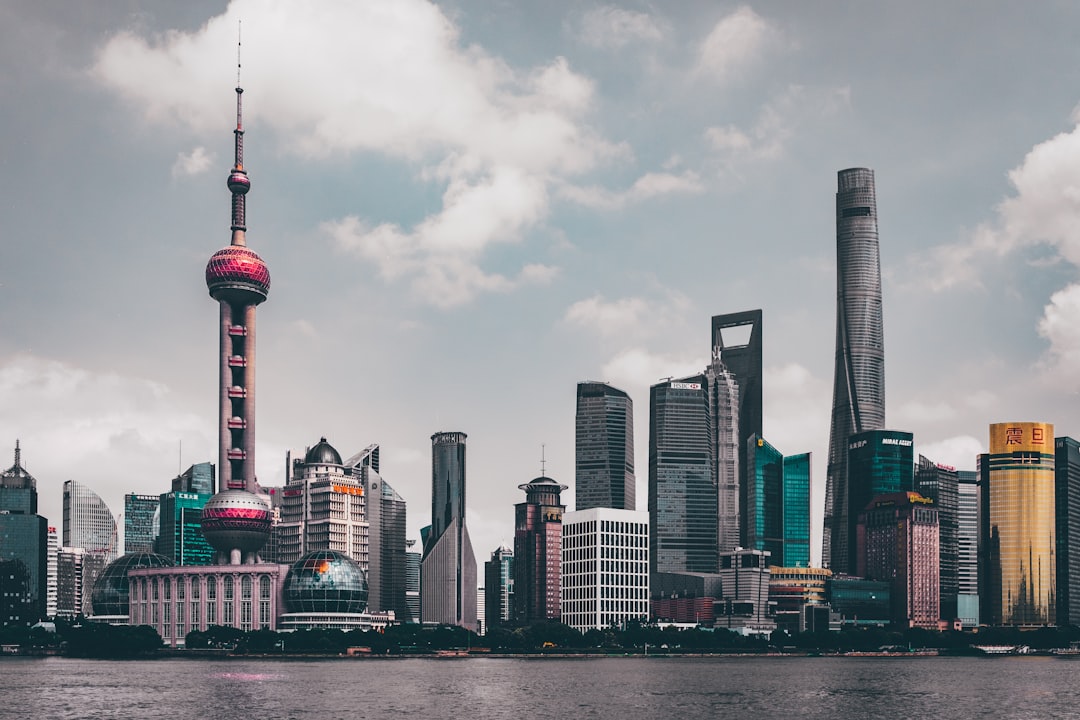
China’s dense business-city landscape makes city selection a strategic sourcing decision. This photograph shows Shanghai and is contextual imagery; it does not depict Yiwu, Foshan or Shenzhen.
Photo by Hanny Naibaho on Unsplash. Licensed under the Unsplash License.
Final next move
Turn the matrix into a visit brief
Select the city that can resolve the team’s largest current sourcing unknown:
- Yiwu: Which products and suppliers belong in the assortment?
- Foshan: Can the supplier consistently make, finish and pack the required physical product?
- Shenzhen: Can the supplier solve the technical, component and compliance requirements?
Create a one-page visit brief containing:
- The visit objective.
- Product categories and controlled specifications.
- Priority supplier list.
- Required meetings and participants.
- Evidence that must be collected.
- Daily schedule and logistics plan.
- The decision the team will make within 48 hours of returning.
Use that decision deadline to prevent the evidence pack from becoming an archive without an outcome. Compare suppliers against the same requirements, record unresolved risks and decide whether each candidate should advance, be held for more evidence or be rejected.
Do not book three cities to avoid choosing; choose the city that can produce the evidence required for the next sourcing decision.
Sourcing information earns its value when it is verified, compared and turned into a decision.