

Sea Freight vs Air Freight: Compare the Complete Shipment
Choose sea or air freight from the shipment's required arrival, handling needs and complete quoted cost.
Choose sea or air freight from the shipment’s required arrival, handling needs and complete quoted cost. A headline rate does not describe a door-to-door service. Compare the same cargo, named collection point and delivery destination, then ask what each provider includes and excludes.
Understand the sea options
Full container load, or FCL, books container capacity for the shipment arrangement. Less than container load, or LCL, consolidates cargo with other shipments. The useful comparison includes packing, handling, consolidation and destination charges, not simply whether your cargo physically fits in a container.
Request the cargo dimensions, packed weights, stackability and handling constraints before quoting. Ask who packs and secures the shipment, where consolidation occurs and which destination services remain payable. Neither FCL nor LCL is automatically the cheaper choice for an unspecified shipment.
Identify when air freight can help
Air freight can be useful when the cost of missing a required arrival outweighs the quoted transport difference, subject to cargo acceptance and available services. Compare options for a bounded urgent quantity separately from the rest of the order. Sending a small urgent portion by air does not require moving the entire order that way.
Confirm cargo eligibility with the carrier or forwarder, especially where batteries, liquids or other restricted goods may be involved. Do not assume a supplier’s ordinary courier experience establishes acceptance for your shipment.
Compare booking through delivery
Ask for the proposed route, service, collection arrangement, booking status, cargo cut-off, document cut-off and delivery responsibilities. Separate a proposed sailing or flight from confirmed booking and actual departure. Transit time on the main leg is not the same as elapsed time from factory readiness to final receipt.
| Comparison field | Question for both quotations |
|---|---|
| Cargo basis | Are dimensions, weight, packing and restrictions identical? |
| Service boundary | Which collection, terminal, clearance and delivery steps are included? |
| Charging basis | Which weight or volume rule applies, and which surcharges remain open? |
| Timing | What events begin and end the quoted transit estimate? |
| Exceptions | Who handles delays, damage, storage and additional charges? |
Route-specific rates and arrival times are Not established until current quotations and service details are obtained. Do not use a fixed day range as a shipment promise.
Make the handoff explicit
Use the agreed delivery term with its named place and applicable version to clarify responsibilities, then check the transport contract for actual services. Confirm the importer arrangement and clearance documents separately. Keep the commercial invoice, packing list, transport document and carton marks consistent.
For a non-urgent order, compare the complete sea options before paying for urgency you do not need. For a time-critical order, verify available air service and the consequences of delay. In either case, approve the documented service and unresolved costs rather than the transport label alone.
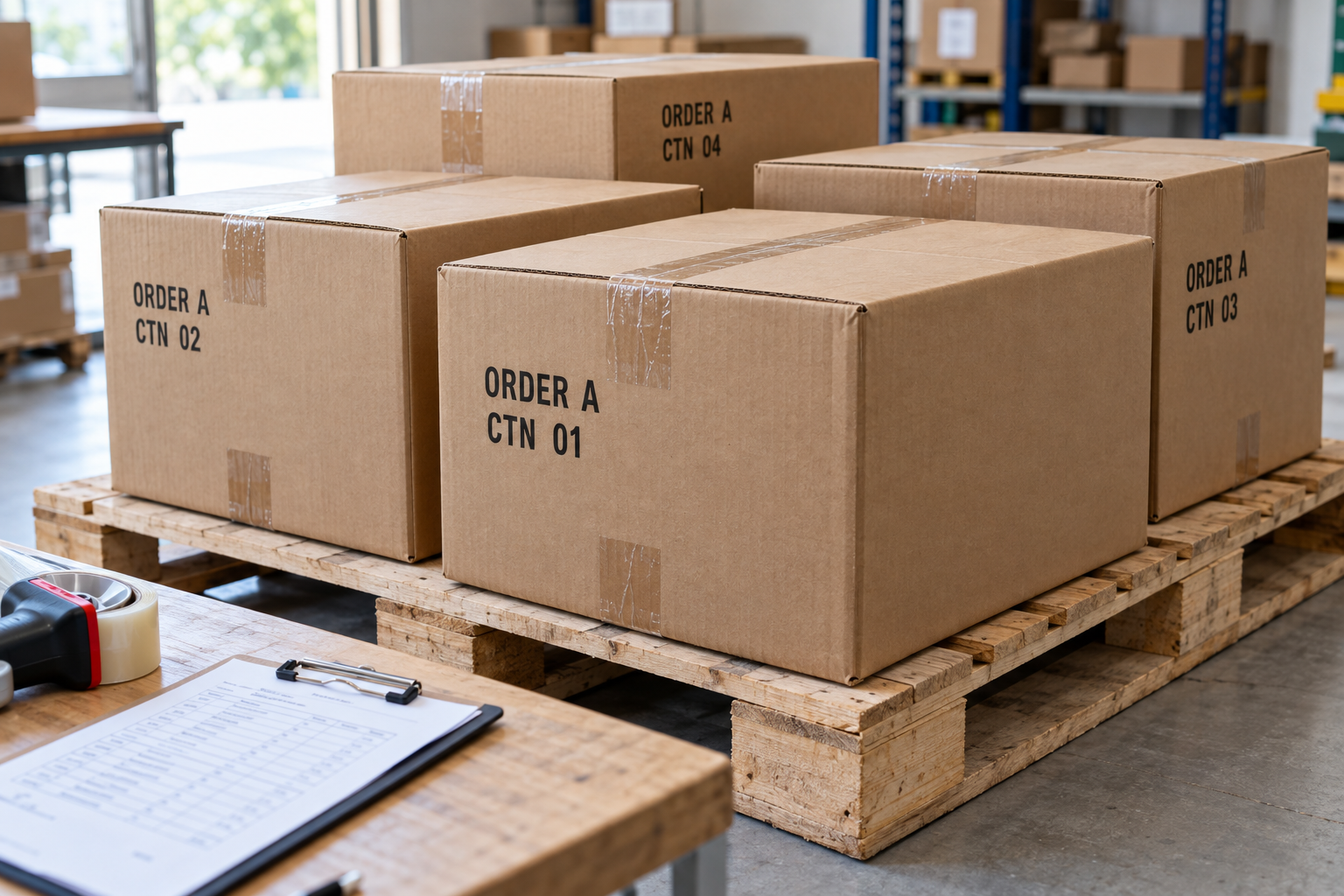
Freight planning and shipment records
Related guides
Incoterms for china buyers · Shipping marks
Sources
- International Trade Administration — Know Your Incoterms
- DHL — Full-container-load ocean freight
- DHL — Less-than-container-load ocean freight
Sourcing information earns its value when it is verified, compared and turned into a decision.
Questions & discussion
Share a question or a useful experience about this guide. Comments appear immediately. Your name and comment are public. Email is optional and stays private; reply emails are not enabled yet. Comment privacy.