

Is the Canton Fair Worth It? A Go or No-Go Check for First-Time Buyers
Decide whether a Canton Fair trip fits your product, order quantity, budget and supplier-search goals.
The suppliers you already contacted online may not exhibit at the Canton Fair. That does not automatically make the trip a waste, and it does not guarantee that the people you meet there will be a better fit. Decide what the visit needs to accomplish: finding new suppliers, comparing physical samples, discussing a product specification or arranging later factory checks.
Before booking, test your plan against three limits: whether the relevant products are shown during the phase you can attend, whether exhibitors can work with your expected order size, and whether the trip’s full cost is justified by the decisions you expect to make. If any answer remains unclear, use the planning steps below before paying for travel.
Start with the product and the right phase
The fair is organized into separate phases with different product categories. Check the organizer’s current classification and dates for the edition you intend to visit; a phase that fits another buyer’s product may not fit yours. Do not infer the phase from a past spring or autumn itinerary. Product areas and scheduling should be verified against the current edition before booking.
Write down the item you want, its intended use, key material or performance requirements, expected quantity and destination market. Search using the product category and relevant terms, not only the names of suppliers you already know. A supplier may use a different product description or may not exhibit. The objective is to identify a useful set of potential conversations rather than prove that familiar businesses will be present.
Use the app entry on the official Canton Fair website and the organizer’s online exhibitor directory. Obtain the app through that official entry rather than an unrelated download listing; names, functions and availability can change. If you cannot establish that your product appears in the phase you can attend, resolve that question with the organizer or a verified exhibitor before treating the trip as a sourcing plan.
Decide what your order size allows
Minimum order quantities vary by product, manufacturer, packaging and degree of customization. Some exhibitors focus on larger orders and may quote a minimum that is beyond a first-time buyer’s budget. Others may be willing to discuss a smaller test, a stock item or a mixed arrangement. A conversation is an opportunity to ask; it is not a guarantee that the supplier will accept your quantity or price.
One buyer account described negotiating a smaller opening order and a better price face to face. Other responses described high minimums and little interest in small buyers. Those opposing experiences are reasons to check your own shortlist, not evidence of one fair-wide policy. Ask several relevant exhibitors for their current terms and record whether the quoted minimum applies per item, color, model or combined order. A lower minimum may come with a different unit price, packaging or lead time.
If you cannot meet the minimums, the immediate value narrows to comparing samples and prices and arranging separate factory verification; it does not create an order-ready supplier relationship. A booth meeting is not a factory audit. Compare the minimum with the amount you can sell, store and finance. A trip may still have research value if you cannot place an order immediately, but set a realistic objective: comparing materials, understanding packaging options or finding companies to contact when your volume increases. Do not assume that attending converts a supplier’s standard terms into the terms you need.
If a supplier says your quantity is too small, ask whether it offers an existing stock product, has a distributor who serves smaller buyers, or can suggest a later volume threshold. Record the answer and move on if the fit is not there. A useful no-go decision can save the cost of a trip or an unsuitable purchase.
Price the trip against your MOQ limit
Calculate transport from your departure point, accommodation, local travel, meals, communications, insurance and any entry or documentation costs that apply to you. Add a line for translation or assistance if you need it, and another for samples, packaging and shipping them home. Prices vary with the city you depart from, booking date, location and length of stay; use current quotes rather than a fixed total from another buyer.
Then compare that cost with the value of the decisions you hope to make. A trip to source several product lines and meet a prepared shortlist may support more decisions than an unplanned visit for one inexpensive item. If you are considering a small trial, calculate whether samples and remote calls could answer the main questions for less. Include the time needed to follow up after returning.
Set a budget ceiling and a decision date. Before booking non-refundable travel, confirm that the current phase covers the product, that you can obtain any required registration and travel documents, and that enough relevant contacts are available. The Canton Fair buyer pre-trip checklist covers the detailed trip preparation; this guide focuses on whether the visit is worth making.
Use the directory, then arrange useful conversations
Build a shortlist by product type and technical requirements. Note each company’s name, product, booth details if confirmed and a contact you can verify through official materials. Send a short inquiry explaining the intended product, destination market, estimated quantity and the questions you would like to discuss. Ask whether the person can meet during the relevant phase.
Avoid relying only on appointments. Some meetings may change or a product may be unsuitable when you see it. Leave time to walk the relevant section, compare alternatives and revisit a promising exhibitor. Equally, avoid planning a day around wandering without a clear brief. You should know what information would change your decision before entering the hall.
Bring a specification sheet, photographs or a non-confidential sketch, the range of quantities you can consider, packaging needs and any documents you need to discuss. If the product involves confidential design details, decide what can be shared in an open booth and what should wait until an appropriate agreement and private follow-up. Collect contact information and a written or photographed record of the quotation with the supplier’s permission.
What to examine at the booth
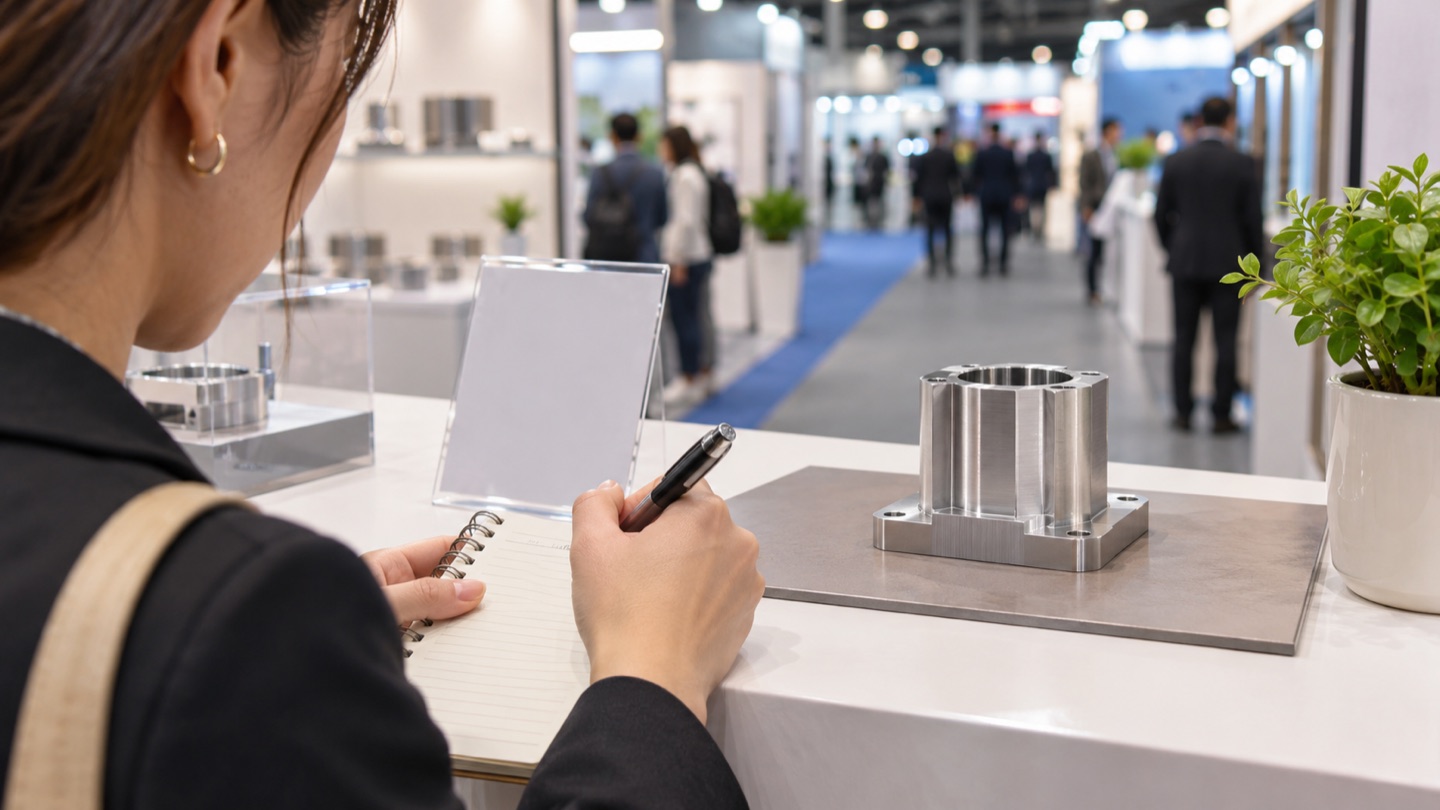
Inspect the sample against your intended use. Ask about materials, dimensions, construction, finishing and packaging. If a feature cannot be checked at the booth, write down the question for a sample order or a technical follow-up. A display item can help you compare appearance and handling, but it is not a substitute for testing the specific product you order.
Ask whether the exhibitor is a manufacturer, a trading company or another representative, and identify the legal business that would issue the quotation and invoice. Request the production location and ask what work is performed there. A booth, a polished brochure or an export claim does not establish all of the company’s capabilities. Plan any factory verification separately from the fair.
Ask for the basis of the quote: product version, quantity, currency, packaging, delivery point and lead time. If you need product documentation for your destination market, identify the exact documents and ask whether they apply to the model and business offering it. Follow up on incomplete answers rather than marking them as confirmed.
Record the next action before you leave: a quotation, a sample, a technical call or a factory appointment. Note the contact name and date, then send a short written recap after the meeting. Keep each company’s information separate so that a photograph or a price does not become detached from the corresponding supplier.
Compare the trip with a remote route
You can begin with a shortlist, video calls, supplier documents and sample orders without attending. Remote conversations may be enough when the specification is settled and a small number of candidates can answer your questions. A sample can help you evaluate the specific item, while a scheduled verification can address questions about the production site. Neither a video call nor a sample alone proves how a future production lot will perform.
An in-person visit has a different potential benefit: comparing many physical products, asking follow-up questions quickly and meeting a wider selection of businesses. That benefit depends on preparation. If the relevant suppliers do not serve your product, destination or quantity, the available conversations may not justify the cost.
Use the pre-shipment inspection checklist to plan the verification that comes after selecting a supplier. If your remote search includes domestic Chinese wholesale listings, the 1688 buying guide explains receiving, payment and inspection questions that require separate planning.
For a category-specific example, the stationery sourcing decision guide shows how product fit changes the travel decision.
Before booking: six checks
- Category and phase: confirm your product and the edition’s current schedule.
- Relevant companies: identify exhibitors or product categories worth investigating and verify current contact information.
- Meetings: request conversations and allow time for alternatives if a contact is unavailable.
- Order size: define your maximum opening quantity and ask about the minimums attached to your product.
- Budget: estimate travel, accommodation, local costs, assistance and sample shipping from current quotes.
- Alternative: list what remote calls, samples and a separate supplier check could establish without a trip.
Go when the visit can answer specific questions that justify the money and time. Postpone or choose the remote route when the product, phase, quantity or budget remains unclear. Either way, judge the suppliers you find by the same written specification, commercial terms and verification plan before placing an order.
Sources
- Reddit discussion · r/guangzhou · 34 comments
Questions & discussion
Share a question or a useful experience about this guide. Comments appear immediately. Your name and comment are public. Email is optional and stays private; reply emails are not enabled yet. Comment privacy.